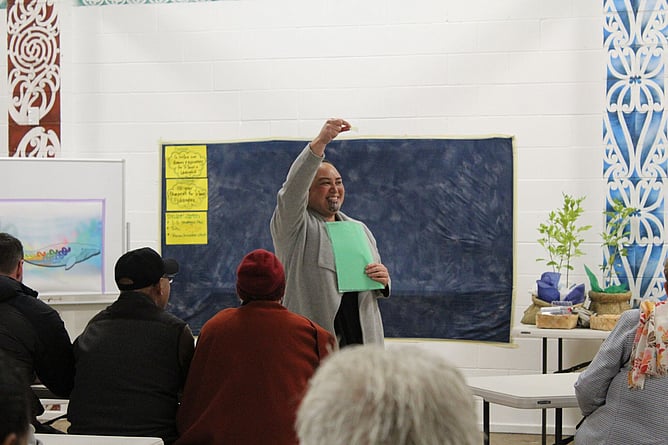
Many people assume that the role of a facilitator is to help groups reach agreement.
But facilitation is not about forcing consensus.
A facilitator’s role is to create a space where diverse perspectives can be shared, understood, and explored.
The goal is not to push people toward the same answer, but to help the group understand each other and find a way forward together.
Sometimes that means discovering where people meet in the middle.
And sometimes it means recognising that agreement simply is not possible.
When that happens, agreeing to disagree can be a perfectly valid outcome.
Good facilitation begins by acknowledging the diversity that every participant brings into the room.
People arrive with different experiences, values, priorities, and expectations.
A facilitator helps the group:
understand the purpose of coming together
hear and respect different viewpoints
explore possible paths forward
In many situations, these conversations help groups move toward shared understanding and agreement.
However, there are times when perspectives are simply too different.
When that happens, the role of the facilitator is not to force resolution.
Instead, the facilitator helps the group acknowledge the differences and decide what comes next.
When Consensus Isn’t Possible
In some cases, the discussion may reveal that people hold fundamentally different views.
If that happens, it is okay for the group to recognise this and move forward without forcing agreement.
Sometimes this leads individuals to realise that the organisation or kaupapa may not be the right fit for them.
Other times it reveals deeper tensions that need to be addressed before meaningful strategic planning can take place.
Both outcomes are part of healthy group dynamics.
Creating a space where these conversations can occur openly is often one of the most valuable parts of the facilitation process.
Lessons From Experience
Working with communities, organisations, hapū, and iwi has taught many lessons about navigating these spaces.
Here are five approaches that have proven helpful.
1. Be honest about what is achievable
It can be tempting to promise outcomes in order to secure a contract.
However, if a group is expecting to achieve something unrealistic within a short workshop, it is important to be upfront.
Setting realistic expectations protects both the facilitator and the group.
2. Make it clear that the facilitator serves the group
Facilitators are not there to manipulate a group toward a predetermined outcome.
Their role is to hold a process that allows participants to bring their own knowledge and wisdom into the discussion.
The direction of the conversation should be shaped by the people in the room.
3. Use a pre workshop survey
Anonymous pre workshop surveys can be incredibly useful.
They often reveal tensions, conflicts, or unrealistic expectations before the session even begins.
Knowing this in advance allows facilitators to prepare appropriate approaches for navigating those dynamics.
4. Let the group know disagreement is acceptable
From the beginning, it helps to create shared agreements about how the group will work together.
Making it clear that it is okay to disagree can reduce pressure and encourage more honest discussion.
5. Be clear about the facilitator’s role
Facilitators are not mediators or counsellors.
If a group reaches a point where conflict prevents progress, it may be necessary for participants themselves to decide what the next steps should be.
Supporting Leaders and Communities
Many organisations book strategy workshops hoping to plan the future, only to discover underlying tensions that need attention first.
This is completely normal.
Strategy work often brings important conversations to the surface.
When those conversations are handled with care, honesty, and respect, they can ultimately strengthen relationships and create more resilient organisations.
For leaders navigating these spaces alone, it is also important to remember that skilled facilitators exist to help carry that responsibility.
Sometimes the most valuable outcome of a workshop is not a perfect agreement, but the courage to have the conversations that matter most.

