In te ao Māori, metaphors and symbolism play an important role in how knowledge is shared, understood, and carried forward.
Stories, pūrākau, and cultural symbols help connect people to their whakapapa, their whenua, and the values that guide their communities.
Because of this, when designing strategic planning workshops with Māori organisations, it is important to understand the stories and history that shape the identity of the group.
These stories often become a powerful foundation for the strategy itself.
Grounding Strategy in Pūrākau
During a strategy wānanga with Whāngārā Farms, the workshop design centred around one of the most significant pūrākau associated with the area.
Whāngārā is widely recognised as the home of the legendary story of Paikea, the whale rider.
According to the pūrākau, Paikea survived a great journey across the ocean on the back of a whale, eventually arriving on the shores of Whāngārā. His story represents strength, resilience, vision, and legacy.
Because the strategy process was focused on mapping the future of the organisation, it felt natural for the workshop to centre around the story of Paikea and the whale.
Bringing the Story Into the Workshop
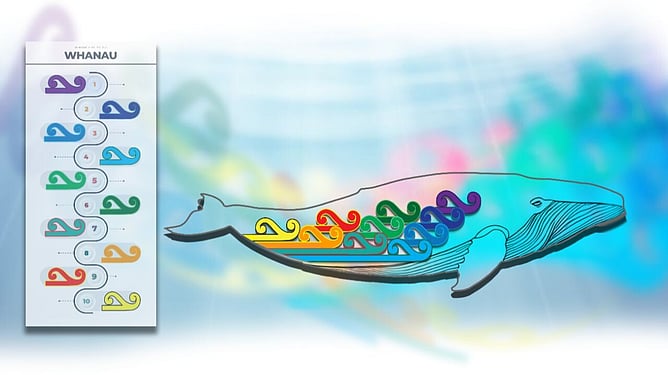
The strategy wānanga began by acknowledging the whakapapa and stories associated with Paikea. Images representing the pūrākau were brought physically into the space so that participants could connect with the narrative throughout the workshop.
Participants were then introduced to the koiri design. This symbol was chosen because it represents both growth and nurturing, as well as the ocean currents that carried Paikea and the whale to land.
Through this symbolism, the workshop design connected participants to the wider story of Whāngārā and the legacy that continues through its descendants today.
Collective Participation in the Strategy Process
More than sixty participants attended the strategy wānanga.
To ensure everyone had a role in shaping the strategy, participants formed ten groups and each group was given a koiri symbol.
Each group then gave their koiri a name that represented the values, behaviours, and energy they wanted to bring into the strategy process.
This activity helped ground participants in the kaupapa of the wānanga while also reinforcing the idea that each person had a role in helping propel the collective vision forward.
Envisioning the Future
From there, the workshop moved into a future visioning exercise.
Participants were invited to imagine the whale carrying them one hundred years into the future.
Together, they explored what the land might look like for future generations and what the mokopuna of their mokopuna would encounter when they arrived on those shores.
This exercise allowed participants to think beyond immediate organisational priorities and instead focus on the long term legacy they wanted to leave behind.
Strategy as a Living Expression
Because the strategy process was grounded in whakapapa, designed collectively by the people involved, and focused on future generations, the outcomes carried deep meaning for the group.
The strategy became more than a document.
It became a living expression of identity, aspiration, and responsibility to both ancestors and descendants.
Why Stories Matter in Strategy
When strategy is shaped through pūrākau, symbolism, and shared cultural narratives, it becomes easier for people to connect with the direction being created.
Participants see themselves within the story. They recognise the values guiding the work. They understand the legacy they are contributing to.
For Māori communities, weaving whakapapa, stories, and symbolism into strategic planning is not simply a creative approach.
It is a way of ensuring that the strategy reflects who the people are and the future they are working toward.

