One of the questions often asked about strategy is a simple one.
Do organisations actually use the strategies they create?
Many people have seen strategic plans developed through lengthy processes, only to watch them sit on a shelf once the planning phase is complete.
When strategy is created through a kaupapa Māori approach, the outcome can look very different.
Strategies That Reflect Te Ao Māori
The strategies developed through AraHina workshops rarely resemble conventional corporate plans.
You are unlikely to see strategic objectives labelled in the typical language of business frameworks.
Instead, the priorities may be expressed through kaupapa such as:
Konohitanga
Kaitiakitanga
Apōpōtanga
The vision statements themselves often reflect deeply cultural concepts, such as He Rau Ake Ake.
These elements are not simply symbolic. They represent the values, aspirations, and identity of the communities involved.
Because of this, the strategy carries meaning that goes far beyond organisational planning.
Bringing Everyone Into the Process
One of the most important reasons these strategies are used is the way they are created.
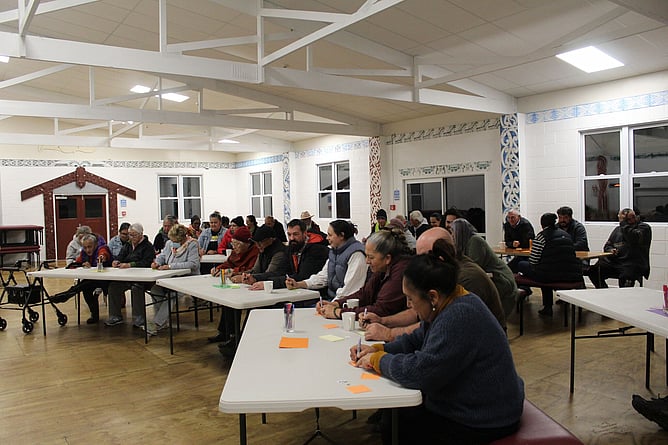
Rather than being written by a small leadership group or external consultant, the strategy is developed collectively with the people it is intended to serve.
This can include participants from across the community and organisation, such as:
those doing the work on the ground
hapū and iwi representatives
farmers and landowners
operational staff
business partners
shareholders
forestry crews
governance boards
When all of these voices are included in the process, the strategy becomes something that people recognise as their own.
Strategy That Holds Meaning
When participants see their own aspirations reflected in the strategy, it begins to carry deeper significance.
People can recognise the hopes they hold for their communities. They can see the future they want for their mokopuna. They can hear the echoes of their ancestors in the language and concepts used throughout the document.
When a strategy holds this level of meaning, it becomes more than a planning tool.
It becomes a shared commitment.
In some cases, groups begin to refer to their strategy not simply as a plan, but as their master plan.
From Strategy to Action
The development process itself can also move quickly when the right people are involved and the kaupapa is clear.
For example, one strategy process involved more than sixty participants working together in a single day to shape the direction of their organisation.
Within five business days, the strategy was visually designed and shared with the group.
From there, the board and team continued the work of turning the strategy into action.
Strategy as a Living Commitment
When strategies are created collectively, grounded in whakapapa, and expressed through kaupapa that reflect the identity of the group, they rarely sit unused.
Instead, they take on a life of their own.
People recognise themselves within the vision and priorities.
They feel connected to the direction that has been set.
And that connection is often what transforms a strategy from a document into a living commitment.

