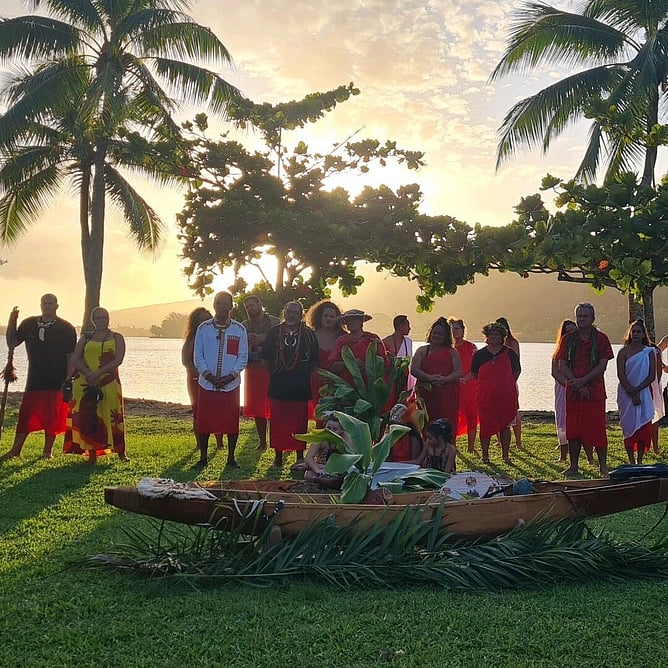
Facilitating in communities can be one of the most challenging forms of facilitation work.
The conversations are often raw. The divisions can be deep. The issues being discussed may carry the weight of generations.
And one thing becomes clear very quickly.
There are no textbooks that can fully prepare you for it.
The Difference Between Corporate and Community Spaces
Many facilitation frameworks have been developed within corporate environments.
In those spaces there are established systems that guide how organisations operate. There are policies, procedures, governance structures, and legal frameworks that provide a clear foundation for decision making.
Community spaces are different.
While they may still involve organisations and formal structures, they are also shaped by relationships, history, identity, and collective memory.
In these contexts, the guiding force is often not law, but lore.
Understanding the difference between the two can fundamentally change how facilitation needs to occur.
When Facilitation Is Tested
Community facilitation quickly reveals whether a facilitation approach truly works.
It tests the facilitator in ways that structured organisational environments often do not.
It tests patience.
It tests courage.
It tests the ability to hold space for disagreement, emotion, and uncertainty.
Carefully designed workshop agendas can quickly be reshaped by the realities of the room. Conversations may move in unexpected directions. Long standing tensions may surface.
In these moments, facilitators must be willing to adapt, listen deeply, and allow the process to unfold in ways that may not have been anticipated.
Where Indigenous Wisdom Emerges
It is often in these challenging spaces that Indigenous knowledge systems reveal their strength.
Facilitation grounded in concepts such as wairua, mauri, mana, and mātauranga offers guidance that extends beyond conventional facilitation models.
These principles help create environments where people feel seen, heard, and respected.
They allow conversations to move beyond surface level discussion and into deeper reflection about relationships, history, and shared futures.
The outcomes of these processes are not always immediate. Sometimes the transformation that begins in a wānanga may take years or even generations to fully unfold.
Ancestral Intelligence
For many Indigenous facilitators, guidance does not only come from formal frameworks or academic theory.
It also comes from what could be described as ancestral intelligence.
This is the wisdom carried through whakapapa, cultural practices, and lived experience.
It is the intuition that helps facilitators sense when a conversation needs to pause, when emotions need to be acknowledged, or when a group is ready to move forward.
This knowledge may not exist in textbooks, but it is deeply present in communities.
Growing Through the Work
Facilitating in community spaces can be demanding.
It requires facilitators to be open to being challenged and changed by the process.
It requires honesty, humility, and a willingness to sit alongside difficult emotions.
Yet it is also in these spaces that some of the most meaningful transformation can occur.
When communities come together to work through complex issues, the potential for healing, understanding, and collective direction begins to emerge.
And while the journey can be challenging, it is also where the true power of facilitation reveals itself.

