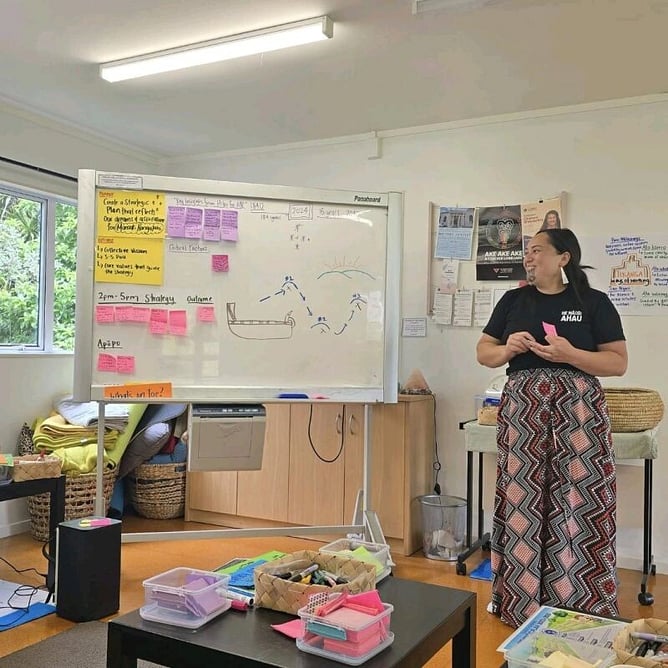
Not all strategic planning workshops or wānanga are filled with smooth conversations and clear outcomes.
In many of the spaces AraHina is invited into, the work goes much deeper.
Facilitating these spaces often means holding conversations where long-standing tensions, hurt, and trauma may surface. These realities are part of the environments that organisations and communities are navigating, and they cannot always be separated from the strategic work that needs to be done.
The Realities Many Groups Are Facing
Some of the challenges that arise during wānanga include:
disputes between hapū or iwi about mana over whenua
strained relationships between long-standing landowners and mana whenua
tensions between operational teams and governance boards
competing priorities between workers and shareholders
environmental concerns such as land erosion or forestry impacts
differences in worldview between tangata whenua and tangata tiriti within organisations
In many cases, these issues are connected to deeper experiences of historical and intergenerational trauma.
This can include trauma connected to colonisation, the loss of land, disconnection from whakapapa, or the loss of language and cultural identity.
When groups gather to discuss strategy, these experiences sometimes come with them into the room.
Learning to Embrace the Role of Facilitator
Earlier in my facilitation journey, these situations felt overwhelming.
Over time, however, I came to understand that communities often need someone who is able to hold and guide a space where these conversations can happen safely.
Recognising this has allowed me to step fully into my role as a facilitator and an upholder of tikanga within these spaces.
It is important to be clear about the boundaries of that role. While facilitators support dialogue and process, they are not mediators or counsellors.
What facilitators can do is help create a space where people can speak honestly and where the group can work through challenges together.
Creating Structure for Difficult Conversations
When facilitating complex discussions, it is important that the group has a clear sense of purpose and structure.
This often includes:
making the purpose of the wānanga visible and clear
outlining a general agenda so participants understand the flow of the session
ensuring participants understand the shared intention of the gathering
Within this structure, facilitators can introduce practices that support participants to release tension and become present in the space.
Sometimes this involves bringing attention to mauri and acknowledging the energy within the room.
When Mamae Surfaces
When deep hurt or emotion surfaces during a wānanga, the facilitator must often pause the planned process.
Instead of pushing forward with the agenda, the space must shift to allow the group to acknowledge and process what has arisen.
At times this may involve simply recognising the presence of mamae.
Acknowledging it directly can help the group feel that their experiences are being seen rather than ignored.
From there, participants may share their perspectives until the group is able to identify the underlying cause or reach a point where the conversation can move forward.
In some situations, the most appropriate outcome may be to close the discussion and reconvene later when the group is ready.
Drawing on Cultural Guidance
In these moments, facilitators often draw strength from the values and guidance found within te ao Māori.
This might involve reflecting on the qualities of ancestors or atua whose presence can guide how the space is held.
For example, the calm and steady qualities associated with Hinepūtehue can offer a reminder to remain centred and create a container where emotion can be held safely.
Practices such as cleansing mauri with water can also help shift the energy within a space and allow participants to move forward with greater clarity.
Caring for the Facilitator
Holding space for difficult conversations can also be emotionally demanding for facilitators themselves.
After a wānanga, it is important to take time to release the weight of what has been shared and avoid carrying that burden forward.
This may involve time in nature, reflection, or cultural practices that help restore balance.
Learning to care for ourselves as facilitators ensures we can continue to show up fully for the communities and organisations we serve.
The Importance of Skilled Facilitation
Facilitating wānanga where complex issues arise requires both skill and care.
When spaces are held well, even difficult conversations can lead to deeper understanding, healing, and clearer direction for the future.
These moments remind us that facilitation is not only about guiding strategy.
It is also about holding the human experiences that sit beneath it.

